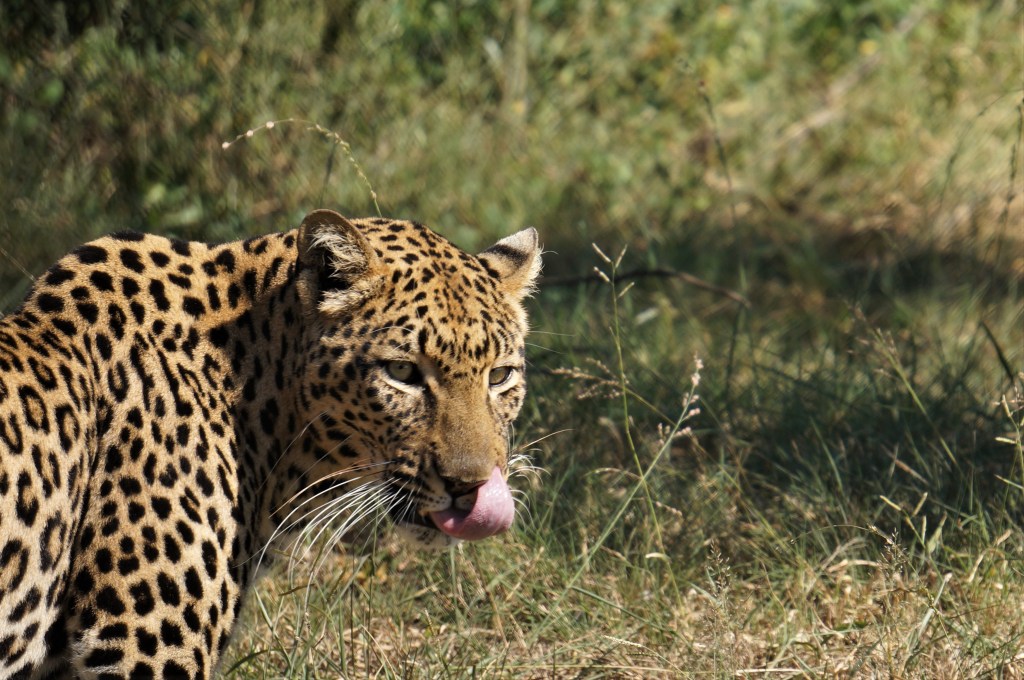
Let’s look at the last three of the “Big Five” starting with the beautiful leopard.
Next to the lion, the leopard is the biggest of the African cats and perhaps the quietest. You won’t hear him roar. At most this silent creature will give the occasional cough-like call. The leopard is a solitary animal. Male and female only spend a brief time together when mating, and then the male takes off. The female, of course, then raises the cubs on her own
If you recall, I said in a previous article it takes a bit of luck to actually get to see the lions, even at Kruger National Park. Well, it takes a whole bucket-load of luck or good fortune to actually spot a leopard. They lurk in the bush or rocky kopje (or koppies—small hills) usually hunting in late afternoon or at night.
They stalk or ambush their prey, getting as close as they can, and then, with a burst of amazing speed, pounce on it. They quickly end it, biting its neck and dragging it off. They carry it up to low lying branches in a tree to keep it away from scavengers and dine at their leisure. We’ll be heading back to South Africa in a few months so wish us luck—maybe we’ll spot one this trip.
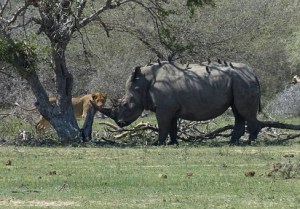
But we’re much more likely to spot this big guy–the White Rhino.
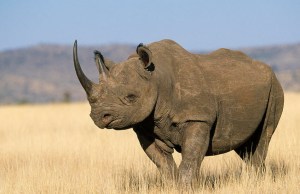
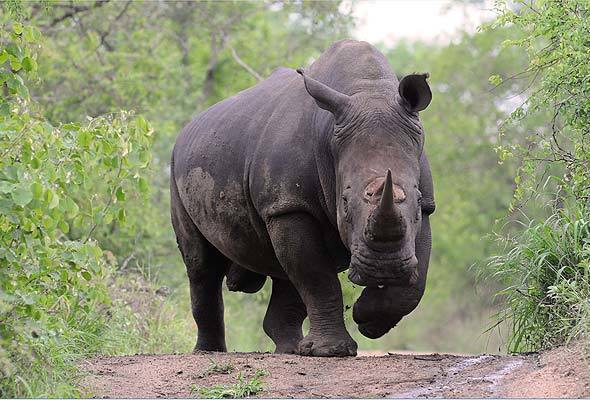
The white rhino and the black rhino are close to the same color which is gray. So how can you tell them apart? Take a look at the lip.
Black Rhino – notice the pointed upper lip
White or Square-lipped Rhino
The white rhino is primarily a grazer and not as aggressive as the black rhino, but looking at the horns (which are actually densely packed fibers–not real horns), I don’t believe I’d like to tangle with either of them. And in spite of their stubby little legs and massive bodies, they can run remarkably fast for short distances. So don’t get too close!
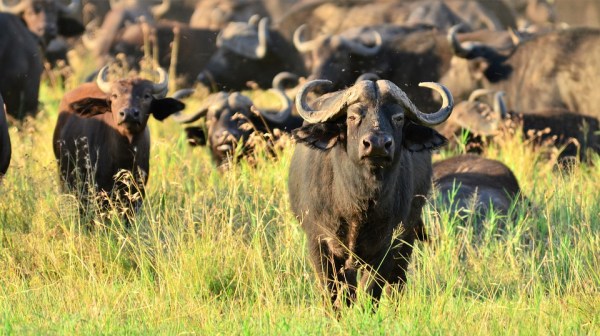
Now, if you spend any amount of time in South Africa, I’m sure you’ll get to see the African or Cape Buffalo.
But probably not this up close and personal. And not usually all alone. Since they are gregarious, you will more often see them running in herds of hundreds. Their grazing behavior changes the long grass lands into shorter grassy areas for other animals to graze upon.
(Picture courtesy of Pixabay)
So there’s a look at the Big Five, but there is so much more to see in South Africa. So many more animals. So many birds with amazing colors like I’d never seen before. So I’m not finished yet. There’s more to come!


 The white rhino is primarily a grazer and not as aggressive as the black rhino, but looking at the horns (which are actually densely packed fibers–not real horns), I don’t believe I’d like to tangle with either of them. And in spite of their stubby little legs and massive bodies, they can run remarkably fast for short distances.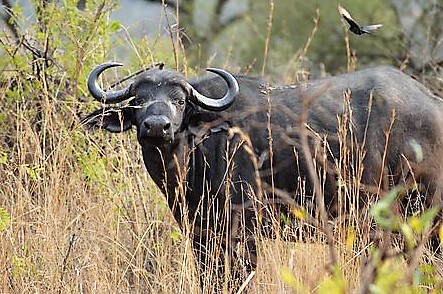

 The Writings of G. K. Bostic